For two decades, the NREGA job card has been one of the most important documents a rural Indian household can hold. It is the passport to guaranteed wage employment under what has long been the world’s largest public employment programme — and, as of mid-2026, the scheme behind it has just undergone its biggest overhaul since it began.
What Is an NREGA Job Card?
The National Rural Employment Guarantee Act (NREGA), passed in 2005 and later renamed the Mahatma Gandhi National Rural Employment Guarantee Act (MGNREGA), gave every rural household in India a legal right to demand unskilled manual work from the government. The job card is the official record that makes this right usable in practice.
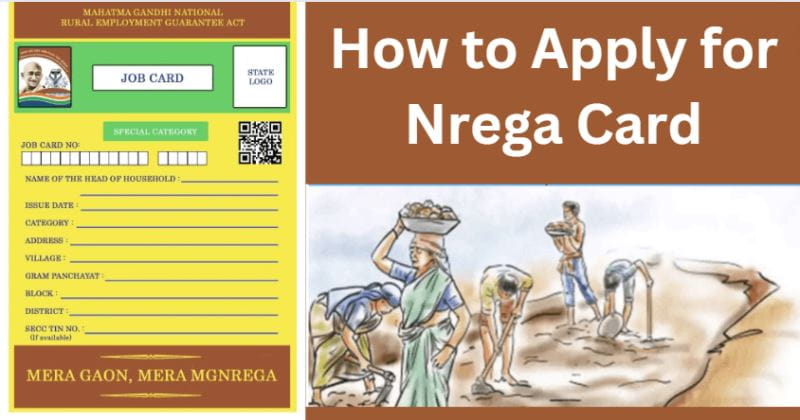
Issued free of cost by the local Gram Panchayat, the job card contains:
- The names and photographs of all adult members of the household who are registered to work
- A unique job card number used to track work, attendance, and wage payments
- A record of days worked and wages paid over each financial year
- Linked bank account and Aadhaar details, used for direct wage transfer
Without a job card, a household cannot demand work or receive wages under the scheme — it is the foundation everything else is built on.
A Major Change in 2026: MGNREGA Is Now VB-G RAM G
On 1 July 2026, the Viksit Bharat – Guarantee for Rozgar and Ajeevika Mission (Gramin) Act, 2025 — known as the VB-G RAM G Act — formally replaced MGNREGA across the country. Union Minister Shivraj Singh Chouhan called the transition a “historic day,” noting that the new law expands the annual guarantee from 100 to 125 days of wage employment per rural household.
Key features of the new framework include:
- 125 days of guaranteed work per household each financial year, up from 100
- A seasonal “no-work” window of up to 60 days that states can notify around peak sowing and harvesting periods, intended to protect farm labour supply
- A shift in funding from the earlier fully Centre-funded, demand-driven model to a Centre-state cost-sharing arrangement based on fixed allocations
- Work tied to four priority areas: water security, rural infrastructure, livelihood assets, and resilience against extreme weather
- Continued protections such as the unemployment allowance, payable if work isn’t provided within 15 days of a demand
The government has said existing MGNREGA job cards remain valid during the transition, as long as they are fully verified — households don’t need to apply for a fresh card from scratch. States were given a window in 2026 to notify and operationalise their specific versions of the scheme, so the exact rollout timeline can vary by state. The change has not been without controversy: opposition parties have criticised the removal of Mahatma Gandhi’s name from the legislation and the move away from open-ended, demand-driven funding.
Who Is Eligible?
Eligibility remains broadly the same as under the old scheme:
- The applicant must be a member of a rural household and at least 18 years old
- Willingness to do unskilled manual work is required
- There is no income ceiling — both below-poverty-line and above-poverty-line households can apply
- At least one-third of the jobs at any worksite are reserved for women, and men and women receive equal wages for the same work
Documents Needed
- Proof of residence in the Gram Panchayat area
- Identity proof (Aadhaar card is effectively mandatory now, since it’s linked to wage payments)
- Passport-size photographs of adult household members
- Bank or post office account details for Direct Benefit Transfer (DBT)
How to Apply for a Job Card
- Visit your local Gram Panchayat office and submit an application — this can be a simple written or even oral request in most states.
- Attach the required documents, including proof of residence and identity for each adult member who wants to be registered.
- Verification: the Gram Panchayat verifies your details and residence.
- Card issuance: once approved, the job card — including photographs — is issued free of charge, typically within about 15 days.
- Demanding work: once you hold a card, you (or any registered adult in the household) can submit a written or oral demand for work at the Gram Panchayat, and the local body is obligated to provide it within 15 days or pay an unemployment allowance instead.
Applications can also often be tracked or initiated digitally through state portals or apps such as UMANG, though the in-person Gram Panchayat route remains the most reliable starting point.
Checking Your Job Card Status and Payments
The official record for job cards and wage payments sits on the Ministry of Rural Development’s NREGA portal. The general path is:
- Open the official NREGA portal.
- Go to the “Reports” section and select your state.
- Choose the financial year, district, block, and Gram Panchayat.
- Open the Job Card / Employment Register to see the list of registered households.
- Click on your job card number to view family details, work history, attendance, and payment status.
You can’t check your bank balance directly through the portal, but you can see how many days you were marked present and what wages have been processed for transfer to your account. Because Aadhaar-based payment is now central to the system, keeping your Aadhaar properly linked to your bank account is essential to avoid payment delays.
Why the Job Card Still Matters
Even as the scheme’s name and some of its rules change, the underlying purpose hasn’t: the job card remains a rural household’s guarantee of a baseline income when other work isn’t available, along with legal protections like the unemployment allowance if that work isn’t provided on time. For many families, it also serves as a broader gateway — a recognised identity and income document that can support access to related welfare schemes, including housing assistance.
If you’re in a rural household without a job card, applying costs nothing but a visit to your Gram Panchayat — and under the new 125-day guarantee, the potential upside is larger than it has ever been.